
Implant dentistry has continued to expand as more practices incorporate implant therapies into patient care. The increasing demand for implant treatment has encouraged many clinicians to pursue dental implant courses that provide not only theoretical education but also the practical ability to complete implant placement safely.
Hands-on implant training is essential because it creates the connection between academic concepts and clinical readiness. A dentist who completes only lecture-based learning may understand principles from didactic courses but will not gain the confidence that comes from supervised surgical participation.
Model-based exercises and online learning can support early knowledge, although they cannot reproduce the biological behavior found in real treatment environments. The gap between theory and practice often becomes evident when new clinicians attempt to transition into implant procedures within their dental practice. For this reason, the central question remains important. What is the best method to acquire skills that prepare a clinician for real surgical conditions?
Research on surgical education emphasizes that exposure to real tissue conditions strengthens learning and increases readiness for surgery. [1]
What Makes Implant Training Truly Hands-On
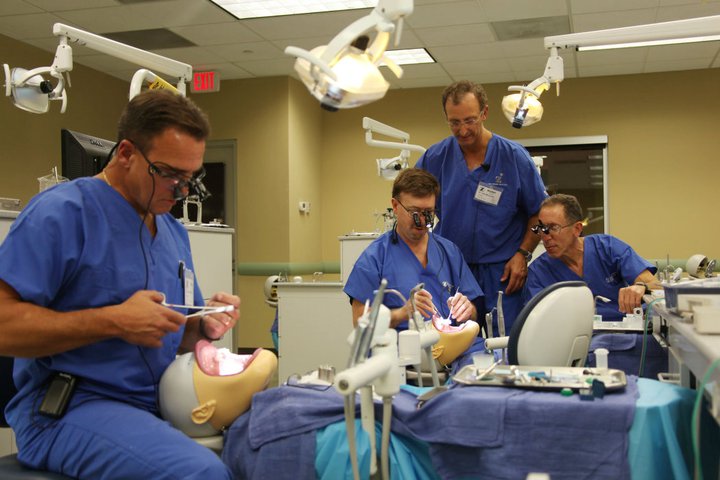
Hands-on training requires direct contact with instruments and tissues in a way that allows learners to develop implant skills and decision-making. A hands-on course must offer hands-on experience rather than observation alone. Observing implant procedures or completing typodont exercises helps with conceptual understanding, although neither approach prepares a clinician for the anatomical variation encountered in dental implant surgery.
True hands-on learning includes repeated participation in supervised surgical experiences so that learners develop familiarity with osteotomy preparation, implant insertion, and soft tissue management. [2,3,4,5,6,7,8,9]
Implant surgery training becomes effective when the learner performs the steps while receiving guidance from an experienced educator who can correct technique and reinforce the principles behind surgical and prosthetic planning. Practical training in implantology must include the opportunity to manage real clinical variability, which creates a stronger foundation for future surgical work.
Types of Hands-On Implant Training Options
Model-Based Training Using Plastic Models or Typodonts
Model-based training is an introductory method that allows learners to practice drill control, implant angulation, and instrument handling within a controlled setting. This early stage supports confidence and prepares participants for more advanced surgical training. While models provide useful repetition, they cannot reproduce the density of bone or the biological behavior found during surgery. They are most effective when combined with training courses that progress into higher levels of realism, including digital workflow planning and supervised surgical work.
Cadaver Training
Cadaver programs offer greater realism by allowing participants to practice flap design, suturing, and exposure on actual human structures. These sessions help clinicians appreciate anatomy and understand bone contours that guide implant placement.
Cadaver training supports preparation for advanced procedures such as sinus lift or bone grafting, although it does not provide the dynamic qualities of healing tissue. These programs remain valuable for learners who want improved anatomical orientation before entering supervised surgical environments or live surgical settings. [5]
Live Patient Training
Live patient implant training has long been considered the gold standard for developing competent surgical technique. During these sessions, participants perform implant placement within a supervised surgical case that replicates the conditions of actual treatment.
They experience variations in bone density, tissue behavior, and anatomic unexpected challenges that no model or cadaver can reproduce. Educational studies confirm that supervised clinical participation improves performance and surgical judgment for those entering implant dentistry practice. [10]
This type of training allows learners to integrate surgical and prosthetic understanding as they evaluate implant position, prosthetic goals, and long-term restorative planning. It remains the strongest preparation for providing dental implant surgery in a real dental practice because it builds decision-making skills and practical confidence.
Mentorship or Preceptorship Programs
Mentorship allows learners to observe and sometimes participate in implant procedures within a clinical environment. This method provides exposure to treatment planning, digital workflow application, surgical instrument use, and postoperative evaluation. The structure varies by mentor, so hands-on involvement is not always guaranteed. Mentorship becomes most effective when combined with structured implant training courses that include supervised surgical sessions. It can also support long-term development as clinicians continue their implant journey.
Mini Residencies
Mini residencies provide comprehensive education through repeated sessions that combine lecture, model practice, case evaluation, digital workflow planning, and supervised surgical participation. These programs offer time for learners to develop techniques progressively and gain hands-on experience across multiple cases.
Mini residencies also introduce concepts such as immediate implant placement, full-arch planning, and implant prosthetics, and they often include instruction in implant and oral applications that relate to restorative and surgical care. [11,12,13,14,15]
Why Live Patient Implant Training Is Considered the Best Method
Supervised surgical participation remains the most effective preparation for implant dentistry. When participants complete implant placement themselves during a surgery course, they learn to manage anatomical challenges and make decisions in real time. This exposure cannot be matched by typodont practice or cadaver exercises. Real surgical environments also improve understanding of how prosthetic goals influence surgical strategy, which strengthens comprehensive dental implant education.
Immediate guidance from experienced educators helps learners apply strategies in implant dentistry that support clinical excellence and patient care. Research shows that supervised surgical experience reduces early complications and increases readiness for implant surgery in private practice settings. [16]
This type of training is especially valuable for learners preparing to place dental implants independently. It also prepares participants for advanced procedures that may involve sinus lift, bone grafting, or full-arch evaluation.
What to Look for in a High-Quality Hands-On Implant Training Program
A strong implant training program includes experienced educators, small group participation and supervised surgical opportunities. Programs offered through an implant institute or implant center often combine lecture, digital workflow planning, and surgical practice in a structured format. Accredited education courses provide reliable instruction and reinforce skills in implant dentistry and oral restoration.
The curriculum should include implant placement, bone grafting principles, soft tissue management, and implant prosthetics. Supervised surgical work should be part of the training program to ensure the learner gains hands-on experience in a real clinical environment. With modern technology, guided surgery and planning software should also be part of implant surgery training so that learners understand how digital workflows enhance surgical precision. [17,18,19]
Red Flags to Avoid
Some training courses claim to offer hands-on learning but limit participants to model practice without any supervised surgical opportunity. Oversized groups reduce the amount of hands-on involvement and limit the ability of educators to provide close guidance. Programs that do not include clinical participation or lack accreditation from organizations such as the American Dental Association or recognized continuing education bodies may not deliver the depth required for safe surgical practice.
So, Which Is the Best Way to Get Hands-On Implant Training
The most effective method for meaningful hands-on implant training is a combination of supervised surgical sessions supported by structured multi-session learning. Mini residencies that include surgical and prosthetic instruction create a balanced educational path that strengthens clinical readiness. Participation in live implant training, supported by digital workflow planning and restorative understanding, builds the foundation needed to provide successful dental implant therapy in practice. Programs that combine practical training with expert mentorship remain the clearest path to developing strong implant skills.
Choosing the Right Path for Your Implant Career
A well-designed hands-on course supports a long-term career with hands-on learning that enhances treatment quality and supports responsible patient care.
By choosing programs that offer both surgical and prosthetic integration, you can elevate your implant skills and provide successful dental implant treatment within your dental practice.
Explore the hands-on training programs at the Dental Implant Learning Center and learn from experienced educators who can guide you through both surgical and restorative techniques to build your expertise with confidence.
References:
- https://www.mdpi.com/2304-6767/12/12/406?
- https://www.straumann.com/content/dam/media-center/neodent/en-us/documents/catalog/2026-Neodent-National-EDU-catalog.pdf
- https://www.oralhealthgroup.com/features/an-implant-osteotomy-paradigm-shift-benefits-of-minimally-invasive-implant-osteotomy-creation-utilizing-a-simple-2-step-process/#:~:text=Step%201%20%E2%80%93%20Direct:%20Setting%20the,1
- https://www.iti.org/academy/theory-and-principles/learning-module/-/module/implant-osteotomies/240
- https://pmc.ncbi.nlm.nih.gov/articles/PMC11674790/
- https://link.springer.com/article/10.1186/s12909-024-06299-w
- https://www.ucl.ac.uk/short-courses/search-courses/soft-tissue-management-dental-implants
- https://www.pikosinstitute.com/pikos-osseodensification
- https://www.scirp.org/journal/paperinformation?paperid=133604
- http://dentalimplantscourse.com
- https://www.dtacademy.ca/courses.php?p=152
- https://usa.adin-implants.com/event/dental-implant-mini-residency-1/
- https://beaconoms.com/implant-mini-residency-program/
- https://www.dentalimplantscourse.com/the-educational-impact-of-live-surgery-in-implant-dentistry/
- https://www.expdentalsolutions.com/comprehensive-dental-implant-training-in-brazil/
- https://pmc.ncbi.nlm.nih.gov/articles/PMC9926829/
- https://pmc.ncbi.nlm.nih.gov/articles/PMC12697450/
- https://pmc.ncbi.nlm.nih.gov/articles/PMC12648810/
- https://www.dentalimplantscourse.com/hands-on-vs-online-training-whats-the-best-way-to-learn-dental-implantology/