
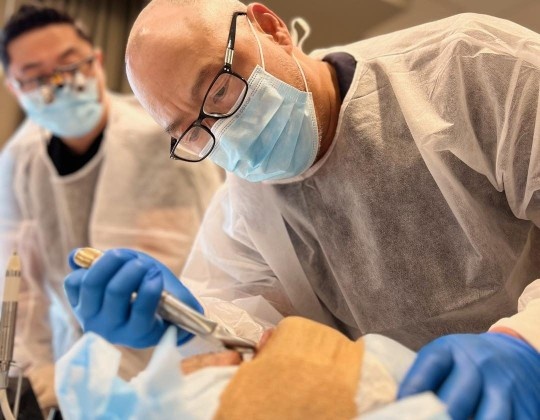
Implant continuing education improves patient outcomes by strengthening diagnosis, refining surgical technique, reducing complications, and promoting evidence-based care. Dentists who complete structured implant CE programs achieve more predictable osseointegration, better prosthetic outcomes, and lower complication rates, all of which directly enhance long-term implant success.
Ready to elevate your implant training?
Dental implant continuing education courses play a direct role in improving patient outcomes by strengthening surgical skills, refining treatment planning, reducing complications, and promoting evidence-based care.
When clinicians pursue structured implant CE courses, they gain up-to-date knowledge in implant dentistry, bone biology, prosthetic design, and risk management, all of which translate into higher success rates and safer treatment.
According to the American Academy of Implant Dentistry, dental implants have a long-term success rate of approximately 95 percent when properly planned and placed. [1] Continuing education helps clinicians maintain and improve those outcomes.
For dentists who want to expand their implant services responsibly, structured dental implant training is not just about adding a procedure. It is about elevating patient care standards across diagnosis, surgery, restoration, and maintenance.
Why Continuing Education in Implant Dentistry Matters for Patient Safety
Continuing education in implant dentistry is essential because implant treatment is technique-sensitive and biologically driven. Successful osseointegration depends on careful case selection, atraumatic surgical technique, and appropriate prosthetic design. [2]
The concept of osseointegration was first defined by Brånemark as a direct structural and functional connection between bone and implant surface. [3] This biological process can be disrupted by poor surgical planning, excessive heat generation, infection, or occlusal overload. [4]
Implant CE courses reinforce the biological principles that protect osseointegration. Dentists learn proper drilling protocols, irrigation techniques, and guidelines for insertion torque. [5]
Research shows that overheating bone above 47 degrees Celsius can cause irreversible bone damage and compromise implant stability. [6,7]
Understanding these thresholds is critical for predictable outcomes, and structured training ensures clinicians respect them.
Continuing education also reduces the risk of peri-implant complications. Peri-implant diseases, including peri-implant mucositis and peri-implantitis, are inflammatory conditions that can threaten implant survival.
The American Academy of Periodontology reports that peri-implant mucositis is common and reversible with proper management, while peri-implantitis involves bone loss and requires intervention. [8]
Implant CE courses emphasize maintenance protocols, risk assessment, and early detection, which directly improve long-term patient health.
How Do Implant CE Courses Improve Diagnostic Accuracy?
One of the most significant ways implant CE courses improve patient outcomes is by strengthening diagnostic skills. [9] Proper implant treatment begins with a comprehensive assessment of bone volume, bone density, occlusion, periodontal status, and systemic health.
The American Academy of Oral and Maxillofacial Radiology highlights the importance of Cone Beam Computed Tomography (CBCT) in evaluating implant sites and identifying anatomical structures such as the inferior alveolar nerve and maxillary sinus. [10]
CE courses teach clinicians how to interpret CBCT scans accurately, which reduces the risk of nerve injury, sinus perforation, and implant malposition. [11,12]
Systemic risk factors also influence implant success. Smoking is associated with a 159% increase in the rate of early implant failure compared to non-smokers. [13] Poorly controlled diabetes can impair wound healing and increase infection risk, although well-controlled diabetes does not appear to significantly compromise implant survival. [14]
Implant CE courses train dentists to assess these risks carefully and modify treatment plans accordingly.
When diagnosis improves, case selection improves. When case selection improves, patient outcomes improve.
Surgical Skill Development and Reduced Complications
Hands-on implant training is a central component of high-quality implant CE programs. Surgical skill directly affects implant stability, soft tissue management, and esthetic results.
Primary stability is a key predictor of successful osseointegration. Studies show that adequate implant stability quotient values correlate with favorable outcomes. [15] CE courses teach clinicians how to evaluate bone density, select implant design, and determine appropriate loading protocols.
Improper angulation or depth can lead to esthetic compromise or biomechanical overload. Prosthetically driven implant placement is now considered the standard of care, meaning the restoration should guide implant positioning rather than the other way around. Training programs emphasize digital planning, surgical guides, and restorative backward planning to ensure optimal functional and esthetic results.
Complication management is another critical area. Implant CE courses cover management of sinus membrane perforations, bleeding control, flap design, suturing techniques, and postoperative care. By preparing clinicians for real-world scenarios, continuing education reduces emergencies and enhances patient confidence.
How Does Implant CE Improve Prosthetic Outcomes?
Implant dentistry does not end with surgery. Restorative design has a profound impact on implant longevity and patient satisfaction.
Occlusal overload has been associated with mechanical complications such as screw loosening and component fracture. [16] CE courses teach occlusal principles specific to implant-supported restorations, including load distribution and implant-protected occlusion. [17]
Soft tissue management also influences esthetic outcomes. The presence of adequate keratinized mucosa around implants has been associated with improved peri-implant tissue health and reduced inflammation. [18] Implant training programs address tissue preservation, provisionalization, and emergence profile design. [19]
When dentists understand both surgical and prosthetic phases, they provide comprehensive implant care rather than fragmented treatment. That continuity directly benefits patients.
Evidence-Based Implant Dentistry and Long-Term Success Rates
High-quality implant CE courses emphasize evidence-based dentistry. Clinicians are trained to evaluate peer-reviewed research, clinical guidelines, and consensus statements.
A systematic review published in Clinical Oral Implants Research reports high long-term survival rates for dental implants, often exceeding 90 percent over ten years when proper protocols are followed. [20] However, success is not guaranteed. It depends on the clinician’s skill, maintenance, and patient compliance.
Continuing education ensures that clinicians stay updated on evolving implant surfaces, digital workflows, guided surgery systems, and biomaterials. Implant dentistry is not static. [21]
Surface technologies, regenerative techniques, and loading protocols continue to advance. Dentists who invest in CE are better positioned to apply innovations safely and appropriately. [22]
How Implant CE Courses Enhance Patient Communication and Informed Consent
Improved patient outcomes are not limited to surgical metrics. Communication plays a central role in satisfaction and adherence.
The ADA emphasizes the importance of informed consent and clear explanation of risks, benefits, and alternatives in dental procedures. [23] Implant CE programs often include modules on case presentation, risk disclosure, and expectation management.
When patients understand healing timelines, maintenance requirements, and possible complications, they are more likely to follow postoperative instructions and attend recall appointments. Compliance directly affects long-term implant survival.
The Role of Structured Implant Programs in Standardizing Care
Comprehensive implant programs such as structured live hands on implant surgical programs or maxicourses provide sequential learning over months rather than isolated weekend lectures. This format allows progressive skill development, mentorship, and case review.
According to the American Academy of Implant Dentistry, credentialed implant dentists must complete extensive education and demonstrate competence before earning fellowship or diplomate status. [24] Structured education pathways raise the overall standard of implant care and promote consistent treatment protocols.
How Does Continuing Education Reduce Implant Failure Rates?
Continuing education reduces implant failure rates by strengthening every phase of treatment. It improves case selection by helping clinicians identify and exclude high-risk candidates, enhances precision in surgical technique, and reinforces proper implant positioning based on restorative principles. [25]
It also refines occlusal design and load management to minimize biomechanical complications, while emphasizing structured maintenance protocols and recall systems that support long-term peri-implant health. [26]
When each phase is optimized, cumulative risk decreases.
Digital Implant Training and Technology Integration
Modern implant CE courses increasingly incorporate digital workflows. Digital treatment planning, CBCT integration, intraoral scanning, and guided surgery enhance precision.
Research indicates that computer-guided implant placement can improve accuracy compared to freehand techniques when properly executed. [27] However, digital tools require training. Without proper education, technology can introduce new errors. [28]
Continuing education ensures that digital systems are used as precision tools. This ultimately protects patients from poorly executed treatment.
Patient Satisfaction and Practice Growth
Improved patient outcomes naturally increase patient satisfaction, referrals, and practice reputation. Studies show that implant-supported restorations significantly improve oral health-related quality of life compared to edentulism. [29]
When dentists are well-trained in implant dentistry, patients benefit in measurable ways. They often experience reduced postoperative discomfort due to atraumatic surgical techniques and proper planning, along with improved esthetic outcomes that blend naturally with surrounding teeth and soft tissue. [30]
Comprehensive training also supports long-term implant stability, better function and chewing efficiency, and greater overall confidence in the care they receive. [30]
These outcomes reinforce trust and long-term retention.
Frequently Asked Questions About Implant CE Courses and Patient Outcomes
Do implant CE courses really improve success rates?
Yes. Success relies on precise case selection and surgical technique. Structured training helps clinicians achieve long-term implant survival rates that frequently exceed 90%.
How many hours of implant training are recommended?
While requirements vary, comprehensive programs usually span several months and include didactic study, hands-on surgery, and mentorship. Top credentials (like AAID Fellowship) require significant clinical experience.
Can general dentists safely place implants after CE training?
Yes. General dentists can successfully perform implant procedures provided they complete formal training and operate within their specific level of competency.
Does continuing education help prevent peri-implantitis?
Yes. Training focuses on early detection and maintenance. Because peri-implant mucositis is reversible, CE-trained clinicians are better equipped to intervene before permanent bone loss occurs.
Education Directly Impacts Patient Care
Implant CE courses are not simply professional requirements. They are clinical safeguards. They improve diagnostic accuracy, refine surgical technique, strengthen prosthetic planning, and enhance communication. Each of these improvements translates into measurable gains in patient safety, implant longevity, and satisfaction.
As implant dentistry continues to evolve, dentists who commit to structured, evidence-based continuing education position themselves to deliver predictable, high-quality care. For clinicians seeking comprehensive dental implant training that prioritizes patient outcomes, explore the full range of programs available at the Dental Implant Learning Center and take the next step toward advanced, responsible implant practice.
References
- https://arvadadentalcenter.com/understanding-dental-implant-success-rates/
- https://www.msjonline.org/index.php/ijrms/article/download/15473/9887/76051
- https://pmc.ncbi.nlm.nih.gov/articles/PMC4439679/
- https://www.dentistchampaign.com/dental-implant-failure/#
- https://pmc.ncbi.nlm.nih.gov/articles/PMC10314359/
- https://arbutusmedical.com/blog-preventing-heat-generation-during-bone-drilling/
- https://pmc.ncbi.nlm.nih.gov/articles/PMC11512001/
- https://www.perio.org/consumer/peri-implant-diseases/
- https://www.rwcimplantclub.com/12-of-why-dental-implant-courses-are-important-for-dentists/
- https://journals.lww.com/joos/fulltext/2024/11250/investigating_the_characteristics_of_the.45.aspx
- https://pmc.ncbi.nlm.nih.gov/articles/PMC12244764/
- https://elitedentalaesthetics.com/benefits-of-cbct-dental-implants-restorative-procedures/
- https://www.sciencedirect.com/science/article/abs/pii/S0300571224005669
- https://turkeyluxuryclinics.com/en/blog/are-dental-implants-safe-for-diabetics
- https://pmc.ncbi.nlm.nih.gov/articles/PMC11068710/
- https://pubmed.ncbi.nlm.nih.gov/20509305/
- https://www.peelperiodonticsstudyclub.com/event-details/ce-course-occlusion-in-implant-dentistry
- https://www.mdpi.com/2076-3417/13/15/8631
- https://www.efp.org/publications-hub/jcp-digest/which-emergence-profile-is-best-for-implant-supported-crowns-in-the-aesthetic-zone/
- https://www.researchgate.net/publication/232715150_Systematic_review_of_the_survival_rate_and_the_incidence_of_biological_technical_and_aesthetic_complications_of_single_crowns_on_implants_reported_in_longitudinal_studies_with_a_mean_follow-up_of_5_ye
- https://yaremadental.com/en/articles/expert-opinion-dental-implants-2025/
- https://www.researchgate.net/publication/387187671_The_importance_of_continuing_education_in_dentistry
- https://www.ada.org/resources/practice/practice-management/types-of-consent
- https://connect.aaid-implant.org/blog/3-reasons-to-choose-an-aaid-credentialed-dentist
- https://pmc.ncbi.nlm.nih.gov/articles/PMC12072791/
- https://pmc.ncbi.nlm.nih.gov/articles/PMC8373900/
- https://pmc.ncbi.nlm.nih.gov/articles/PMC11853947/
- https://blog.ddslab.com/6-common-digital-dentistry-mistakes-to-be-aware-of
- https://pmc.ncbi.nlm.nih.gov/articles/PMC12884350/
- https://www.orovalleydentalarts.com/advanced-training-why-it-matters/