
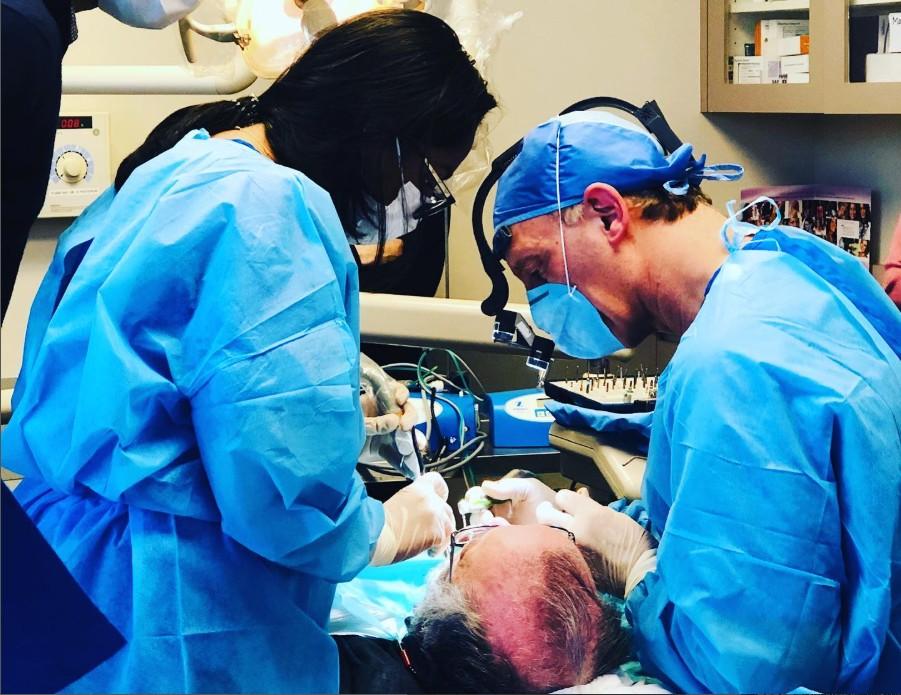
Becoming a dental implant dentist requires formal dental education, clinical training in implant surgery and prosthetics, ongoing continuing education, and adherence to professional standards established by accredited dental organizations.
Dental implants are considered one of the most advanced restorative procedures in modern dentistry, requiring both surgical precision and prosthetic expertise to achieve long-term success.
Dental implant dentistry continues to grow due to rising tooth loss among aging populations and increasing patient demand for fixed, natural-looking tooth replacement solutions.
This guide explains exactly how to become a dental implant dentist, including education requirements, training pathways, certifications, and career advancement opportunities.
What Is a Dental Implant Dentist?
A dental implant dentist is a licensed dentist who has received advanced training in the placement, restoration, and maintenance of dental implants. [1]
Dental implants are titanium or zirconia posts surgically placed into the jawbone to replace missing tooth roots and support crowns, bridges, or dentures.
While all dentists receive basic education in restorative dentistry, implant dentistry requires additional training beyond dental school due to the surgical and biomechanical complexity of implant placement. Many implant dentists focus exclusively on implant procedures, while others integrate implants into general or specialty practice models. [2]
How Long Does It Take to Become a Dental Implant Dentist?
It typically takes between eight and twelve years to become a dental implant dentist, depending on the level of specialization and training pursued. [3]
This timeline includes undergraduate education, dental school, optional live hands on implant surgical training, and postdoctoral implant education.
Dental implant competency is achieved progressively through clinical experience and continuing education rather than a single certification pathway.
Step 1: Earn a Bachelor’s Degree
The first step in becoming a dental implant dentist is completing a bachelor’s degree from an accredited college or university. Most dental school applicants major in biology, chemistry, or health sciences, although no specific major is required as long as prerequisite coursework is completed.
Required coursework typically includes general biology, general and organic chemistry, physics, and anatomy, all of which provide the scientific foundation needed for dental education.
Step 2: Graduate from an Accredited Dental School
After earning a bachelor’s degree, students must graduate from a dental school accredited by the Commission on Dental Accreditation to become licensed dentists in the United States. Dental school programs award either a Doctor of Dental Surgery or Doctor of Dental Medicine degree, both of which are equivalent in scope and licensure eligibility.
Dental school typically takes four years and includes didactic coursework, simulation labs, and supervised clinical training in restorative dentistry, oral surgery, periodontics, and prosthodontics. While implant dentistry is introduced in dental school curricula, most programs provide limited hands-on implant experience due to time and accreditation constraints.
Step 3: Obtain Dental Licensure
All dentists must obtain state licensure before practicing dentistry, including implant dentistry. Licensure requirements include graduating from an accredited dental school and passing the National Board Dental Examinations or the Integrated National Board Dental Examination. [4]
Dentists must also pass a regional or state clinical examination and meet jurisprudence requirements depending on state regulations.
Step 4: Complete Advanced Implant Dentistry Training
Dental implant dentists must pursue advanced postdoctoral training in implant dentistry beyond dental school to achieve clinical competency. Implant dentistry involves surgical placement, bone grafting, sinus augmentation, occlusion, prosthetic planning, and long-term maintenance, which require specialized education.
Advanced implant training can be obtained through continuing education programs, implant surgical programs, university-based certificate programs, or mentorship-driven clinical courses. These programs vary in length from several months to multiple years and include didactic instruction, hands-on surgical training, and live patient treatment.
Dental Implant Learning Center offers comprehensive implant education pathways designed for general dentists seeking to safely and predictably integrate implants into clinical practice, making it a valuable internal resource for readers exploring advanced training options.
Step 5: Consider a Dental Specialty Surgical Program
While not required, some dentists pursue specialty training to deepen their expertise in implant dentistry. Specialties most closely associated with implant dentistry include oral and maxillofacial surgery, periodontics, and prosthodontics.
Hands-on surgical programs range from two to six years and provide extensive surgical and restorative implant experience. However, many successful implant dentists are general dentists who completed advanced continuing education rather than specialty surgical training.
Step 6: Earn Professional Implant Credentials
Professional credentials help demonstrate advanced training and commitment to implant dentistry standards. The American Academy of Implant Dentistry offers Associate Fellow and Fellow credentials based on education, case documentation, and examination.
Board certification through organizations such as the American Board of Oral Implantology or the American Board of Implant Dentistry further enhances professional credibility and patient trust.
Step 7: Gain Clinical Experience and Mentorship
Clinical experience is essential for developing proficiency in implant dentistry. Implant dentists improve outcomes through case selection, treatment planning, and repetition under mentorship from experienced clinicians.
Mentorship-based training models reduce complication rates and accelerate skill development compared to isolated continuing education courses.
The Dental Implant Learning Center emphasizes structured mentorship and guided implant placement to support safe clinical integration for general dentists.
What Skills Are Needed to Become a Dental Implant Dentist?
Dental implant dentists must possess strong surgical skills, diagnostic ability, prosthetic planning expertise, and patient communication proficiency. Successful implant treatment requires understanding bone biology, occlusion, digital dentistry, and interdisciplinary collaboration.
Attention to detail and commitment to lifelong learning are critical due to evolving implant materials, techniques, and technologies.
How Much Do Dental Implant Dentists Earn?
Dental implant dentists typically earn higher incomes than general dentists because implant procedures command premium fees. Practice revenue varies based on case complexity, geographic location, training level, procedure volume, and referral volume from general dentists.
Individual dental implant procedures commonly range from $3,000 to $6,000 per implant, significantly increasing overall practice revenue when implants are integrated effectively into the practice model. [5]
Is Dental Implant Dentistry Worth It?
Dental implant dentistry is widely regarded as a rewarding career path due to its impact on patients’ quality of life and professional satisfaction. Implant therapy restores function, esthetics, and confidence for patients with tooth loss, making it one of the most transformative dental treatments available.
For dentists, implants offer clinical challenge, financial growth, and long-term patient relationships.
Frequently Asked Questions About Becoming a Dental Implant Dentist
Can a general dentist place dental implants?
Yes, general dentists are legally permitted to place dental implants if they have appropriate training and competence, as dental licensure does not restrict implant placement to specialists. Proper education and mentorship are strongly recommended to ensure patient safety and treatment success.
Do dental implant dentists need board certification?
Board certification is not legally required but enhances credibility and demonstrates advanced expertise in implant dentistry. Many patients and referral partners view board certification as a marker of excellence.
What is the best way to learn dental implants?
The most effective way to learn dental implants is through comprehensive education programs that combine didactic learning, hands-on training, live surgical experience, and mentorship.
Your Path to Becoming a Dental Implant Dentist
Becoming a dental implant dentist requires dedication, advanced education, and a commitment to clinical excellence. With proper training and mentorship, you can safely and successfully incorporate implant dentistry into your practice and deliver life-changing care to patients.
For dentists ready to take the next step, exploring advanced implant education through trusted institutions like Dental Implant Learning Center is a strategic investment in long-term professional growth and patient care excellence.
Ready to deliver the life-changing benefits of dental implants to your patients? Bridge the gap between theory and surgical mastery at the Dental Implant Learning Center.
Your journey toward surgical mastery starts here. Click here for CE Program Details. For more information on how our curriculum fits your goals, contact us now.
We look forward to supporting your commitment to life-changing patient care!
References:
- https://burwooddentalcare.com.au/who-can-perform-dental-implant-procedures/
- https://www.toothsome.io/blog/all-on-4-dental-implants
- https://eastenddentistry.com/how-long-does-it-take-to-become-a-dentist/
- https://www.ada.org/resources/careers/licensure
- https://www.overjet.com/blog/average-dental-practice-revenue-in-2025-complete-breakdown-by-specialty