
Dental implants are among the fastest-growing services in modern dentistry, and patients are actively seeking dentists who can place and restore implants confidently. According to the American Academy of Implant Dentistry, demand for implant procedures continues to rise each year as patients look for more permanent tooth replacement solutions. [1] But mastering implant placement requires more than attending a lecture or watching a demonstration.
The right dental implant training program can elevate your skills, grow your practice, and give you the hands-on experience needed to deliver predictable results. Industry guidelines from organizations like the American Board of Oral Implantology and the International Congress of Oral Implantologists emphasize the importance of structured, practical training for ensuring clinical competency in implant dentistry. [2]
If you’re ready to expand into implant dentistry but don’t know which implant course to choose, use this guide to evaluate programs, avoid common pitfalls, and select training that truly prepares you to perform dental implant procedures safely.
How to Choose the Right Dental Implant Training Program
Why Implant Training Matters More Than Ever
Dental implant demand has surged over the last decade. General dentists are under pressure to provide implant services in-house. Many continuing education (CE) programs teach theory, not surgical ability. [3] To confidently place dental implants in your practice, you need structured, clinically focused CE training that goes beyond PowerPoint slides. This is why choosing the right implant training program matters, and why the course you select will directly impact your outcomes, confidence, and long-term success in implant dentistry.
Key Factors to Consider When Choosing an Implant Training Program
1. Hands-On Experience vs. Lectures
Some implant courses advertise “hands-on” training, but in reality, they offer little more than plastic model exercises or passive observation. True hands-on implant training requires far more depth and realism. [4] The strongest dental implant courses include drilling on bone-level models or cadavers, suturing practice, guided and freehand implant placement exercises, and step-by-step surgical workflows that mirror real clinical scenarios.
High-quality implant education follows a “tell, show, do” methodology, meaning instructors explain the technique, demonstrate it, and then allow participants to perform the procedure under supervision. If a CE course relies mostly on lectures or demonstrations, you may leave with theoretical knowledge but without the surgical skills needed to place implants confidently. [5]
2. Live Surgery Training Opportunities
Live surgery is what transforms theoretical knowledge into predictable implant skills. Working on a real patient under expert supervision teaches you to make quick but thoughtful clinical decisions, manage anatomical variations, and handle real soft tissue and bone. This kind of hands-on training builds genuine confidence and muscle memory, two qualities that cannot be acquired through observation alone. [6]
A quality implant training program should clearly state that you will perform live implant surgeries, not just watch them, and should outline how many implants you can expect to place during the CE program. If you want to return to your practice ready for implant placement immediately, live patient training is essential.
Tip: Ask the course how many implants you will place, not how many you will observe.
3. Experience and Reputation of Faculty
The expertise of your instructors plays a major role in the quality of your dental implant training. Courses led by seasoned oral surgeons or implant dentistry specialists offer deeper insights, more comprehensive guidance, and safer supervision than programs taught by clinicians with limited surgical backgrounds. [7]
Look for implant courses that openly share their instructors’ credentials, surgical experience, patient outcomes, and teaching philosophy. A reputable implant training program will feature educators with thousands of successful implant surgeries, strong clinical reputations, and a proven track record of helping general dentists transition effectively into implant dentistry.
Tip: Read reviews, check credentials, explore before-and-after cases, and look for mentorship availability after the course ends.
4. Program Structure: Weekend Course vs. Mini-Residency
The structure of your implant training program will greatly influence how much you learn and how confident you feel afterward. Weekend implant courses provide a fast-paced introduction to implantology, covering treatment planning, digital workflows, and technique fundamentals. They are ideal for dentists who want to explore implant dentistry before committing to more advanced training.
However, weekend courses often lack the repetition and hands-on training necessary to build surgical confidence. [8] Mini-residencies, on the other hand, extend over several weeks or months, offering multiple sessions that allow you to learn gradually, practice repeatedly, and build your implant skills consistently. They typically include more live patient surgeries, deeper exploration of bone grafting and surgical procedures, and ongoing guidance. If your goal is to integrate implant placement into your practice with predictability, a mini-residency is often the better choice.
5. Class Size and Training Environment
The size of the class and the environment in which you train can significantly influence your implant learning experience. Smaller class sizes ensure that each participant receives individualized attention during hands-on exercises, live implant surgeries, and instructor demonstrations. This leads to more personalized feedback, more opportunities to ask questions, and closer supervision during surgical procedures. [9]
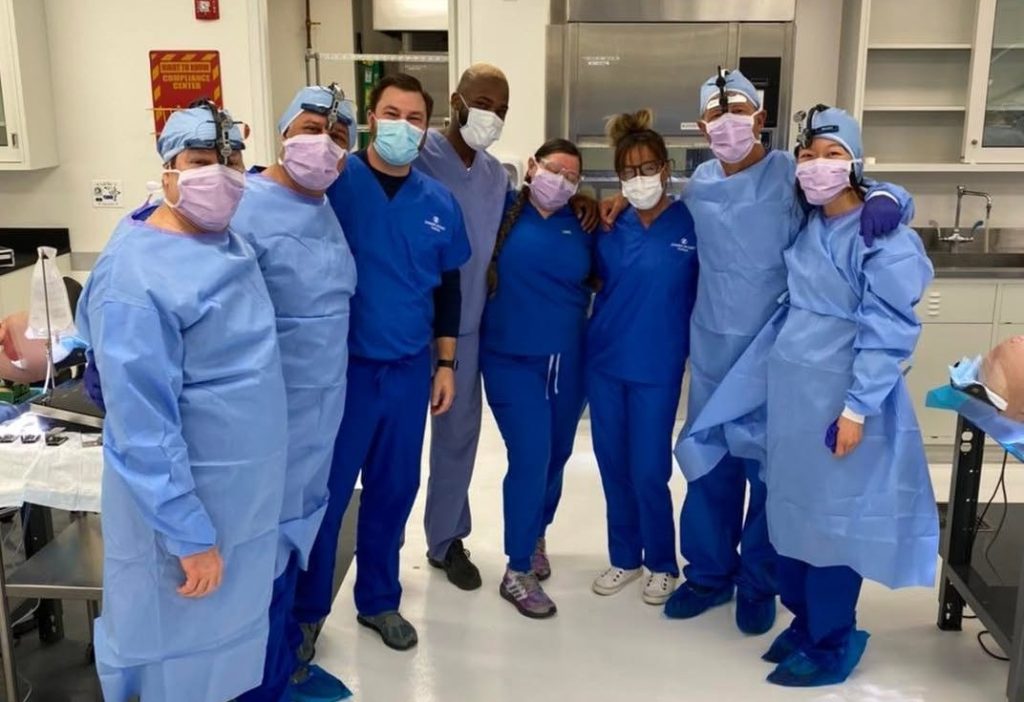
Training in a true clinical setting, complete with surgical operatories, CBCT imaging, digital dentistry tools, proper lighting, and real instruments, creates a more realistic environment than learning in hotel conference rooms or temporary setups. When the environment mirrors an actual dental practice, you are better prepared to transfer those implant skills to real patient care.
6. Accreditation, CE Credits, and Certification
Accreditation is a key indicator of the educational quality and legitimacy of any implant training program. CE courses accredited by organizations such as ADA CERP or AGD PACE undergo evaluation to ensure they meet professional standards for dental continuing education. Accredited programs offer reliable CE credits that count toward licensure requirements and demonstrate that the curriculum is structured, comprehensive, and ethically sound.
Certification at the end of the program is another benefit, providing documentation of your training and strengthening your professional credibility. [10] A transparent, well-organized curriculum with clear objectives and learning outcomes reflects a program designed with your long-term success in implant dentistry in mind.
7. Technology, Equipment, and Materials You’ll Train With
Modern implant dentistry relies heavily on advanced technology, so your training should too. The best programs incorporate CBCT imaging, digital workflows, surgical guide planning, and up-to-date implant systems into their curriculum. Training with current tools and materials helps you develop familiarity with the technology you’ll use in your own practice and ensures you’re learning methods that reflect today’s standards, not outdated techniques. [11] You should also gain hands-on experience with surgical kits, grafting materials, sutures, and instruments that match what you’ll encounter clinically. When a program invests in modern equipment, it signals that they are committed to providing high-quality, real-world training.
If a course uses outdated methods or off-brand implant systems, consider it a red flag.
8. After-Course Support & Mentorship
One of the biggest challenges dentists face after taking an implant course is putting their new skills into practice. Without guidance, many dentists hesitate to treat their first few implant patients even after strong training. That’s why ongoing mentorship and follow-up support are vital components of quality implant courses. [12]
Post-course mentorship gives you access to experienced instructors who can answer questions, review treatment plans, and help guide you as you begin placing implants in your own practice. This support ensures that your learning continues long after the CE course ends and prevents early mistakes that could impact patient outcomes.
Questions to Ask Before Enrolling
Use this checklist to evaluate any implant course:
- How many implants will I place personally?
- Will I perform live surgery or just observe?
- What’s the class size?
- Who is the instructor, and what are their credentials?
- Is the course accredited for CE credits?
- Do I get mentorship after the course?
- Which implant system do they teach?
- Will I learn grafting, suturing, and complication management?
If a program can’t answer these questions clearly, walk away.
Red Flags to Avoid
Some implant courses look appealing but fall short. Watch out for programs that offer lecture-only classes marketed as “hands-on,” provide no live patients, restrict you to crowded classrooms, or rely on instructors without surgical credentials. Avoid programs with outdated curriculum, vague promises of instant implant mastery, or no post-course support. A trustworthy implant course is transparent, structured, and focused on real clinical outcomes.
Examples of Strong Implant Training Programs
High-quality implant training programs share several defining characteristics that set them apart from basic lecture-style CE. These programs emphasize live patient surgical experience, allowing dentists to perform procedures under direct supervision rather than simply observe. They also maintain small group, hands-on instruction, ensuring every participant receives personalized guidance and meaningful practice time.
A strong program takes place in a dedicated surgical training facility, not a conference room, so dentists train with real equipment in a true clinical environment. Instruction is led by experienced oral surgeons, offering participants access to instructors with deep surgical expertise and a proven track record of teaching. Many top-tier courses are structured as multi-session mini-residencies, allowing dentists to build skills gradually through repetition, review, and increasing complexity. Just as importantly, these programs provide post-course mentorship, helping dentists apply new techniques when they return to their practices.
Programs like the Dental Implant Learning Center’s Mini-Residency exemplify this high standard. With live patient surgeries, hands-on supervision, and a comprehensive, step-by-step curriculum, the program prepares dentists to place implants confidently in real-world clinical settings.
Choosing the Best Program for Your Goals
The best dental implant training program is the one that equips you with meaningful confidence, hands-on repetition, and real surgical experience, not just theoretical understanding. Your ideal program should offer reliable mentorship, modern techniques, and practical training you can implement immediately once you return to your practice. Whether you’re interested in a short introductory weekend course or a full multi-session mini-residency, choosing the right program will influence your clinical success for years to come. Investing in high-quality implant training ultimately benefits not only your skill development but also your patients, your practice growth, and your long-term confidence as a dental professional.
Begin your advanced implant training today.
References:
- https://thedentalofficeatchestnuthill.com/dental-implants-facts/
- https://www.aboi.org/
- https://bmcmededuc.biomedcentral.com/articles/10.1186/s12909-025-07627-4
- https://www.smts-1.com/2023/08/19/cadaver-trainings-help-dentists-realize-their-dental-implant-potential/
- https://www.mdpi.com/2304-6767/12/12/406
- https://www.implantseminars.com/live-patient/
- https://www.implantdirect.com/en-us/courses
- https://pmc.ncbi.nlm.nih.gov/articles/PMC1421196/
- https://austincareerinstitute.edu/blog/trade-school/personalized-education/
- https://implanttrainingcourses.com/blog/dental-implantology-certifications-in-usa/
- https://daschooljc.com/the-importance-of-continuing-education-for-dental-assistants/
- https://pmc.ncbi.nlm.nih.gov/articles/PMC10335246/