
Healthy gum tissue around a dental implant is the biological barrier that prevents bacteria from reaching the bone and destabilizing the implant. Without proper soft tissue management before, during, and after implant placement, even technically perfect surgery can fail over time. Peri-implant mucositis and peri-implantitis, the two most common implant-threatening conditions, are largely preventable when soft tissue quality and architecture are carefully managed at every stage of treatment.
Understanding the Role of Soft Tissue in Implant Dentistry
Dental implants have one of the highest long-term success rates of any surgical intervention in modern medicine, with well-documented survival rates exceeding 95 percent over ten years when placed and maintained correctly. A 2019 systematic review and meta-analysis published in the Journal of Dentistry reported a summary estimate of 96.4 percent implant survival at the ten-year mark. [1] But survival and success are not the same thing. An implant that remains in place while surrounded by inflamed, receding, or infected gum tissue is not a successful outcome. It is a failure in progress.
The soft tissues surrounding a dental implant, collectively called the peri-implant mucosa, serve a role that goes well beyond appearance. They form a physical and biological seal around the implant collar, protecting the underlying bone from the oral environment. When this seal is compromised, bacteria gain access to the peri-implant sulcus, triggering an inflammatory cascade that can, over time, result in significant bone loss and implant failure.
Soft tissue management refers to the set of clinical strategies used to optimize the quality, quantity, and architecture of gum tissue at the implant site. It begins at the treatment planning stage and continues through the maintenance phase of care. Clinicians who understand this continuum deliver outcomes that are not only more esthetic but also measurably more durable.
What Is the Peri-Implant Mucosa and Why Does It Matter?
The tissue that surrounds a natural tooth and the tissue that forms around a dental implant are anatomically similar but biologically distinct. Understanding this distinction helps explain why implants are more vulnerable to certain soft tissue complications than natural teeth.
Natural teeth benefit from a periodontal ligament, a dense connective tissue that anchors the tooth root to the surrounding bone and plays an active role in immune defense. Implants, by contrast, integrate directly with bone through osseointegration. They lack a periodontal ligament entirely. The connective tissue fibers in the peri-implant mucosa run parallel to the implant surface rather than inserting perpendicularly, which means the biological seal is structurally weaker. [2]
This weaker seal has real clinical consequences. Bacteria and their toxins can penetrate the peri-implant sulcus more readily than they penetrate the healthy gingival sulcus around a natural tooth. When the soft tissue seal is thin, poorly keratinized, or surgically disrupted without appropriate reconstruction, the risk of peri-implant disease increases substantially.
The Importance of Keratinized Tissue Width
One of the most debated questions in implant dentistry has been whether an adequate zone of keratinized mucosa around an implant is clinically necessary. A growing body of evidence suggests that it is. A 2013 systematic review and meta-analysis published in the Journal of Periodontology found that implant sites with inadequate keratinized mucosa were associated with significantly greater plaque accumulation, more gingival inflammation, greater mucosal recession, and greater attachment loss compared to sites with adequate keratinized tissue. [3]
Keratinized tissue is more resilient to mechanical forces from chewing, brushing, and prosthetic components. It also appears to create a more effective physical barrier to bacterial infiltration. When a patient presents with insufficient keratinized tissue at a planned implant site, clinicians may recommend a soft tissue augmentation procedure to correct this before or at the time of implant placement.
Peri-Implant Disease: What Happens When Soft Tissue Management Fails
Peri-implant disease is an umbrella term covering two related but distinct conditions: peri-implant mucositis and peri-implantitis. Both are driven by biofilm accumulation around the implant and are significantly influenced by the quality and management of surrounding soft tissue.
Peri-Implant Mucositis
Peri-implant mucositis is characterized by reversible inflammation of the soft tissues surrounding an implant without concurrent bone loss. It is considered the precursor to peri-implantitis in most cases. A 2015 systematic review by Derks and Tomasi in the Journal of Clinical Periodontology estimated a weighted mean prevalence of peri-implant mucositis at approximately 43 percent. [4]
Because mucositis is reversible with professional debridement and improved oral hygiene, early detection is everything. This is where the architecture of the peri-implant soft tissues becomes critical. Tissue that is well-shaped, cleanable, and adequately thick is far less likely to develop mucositis than tissue that is hyperplastic, thin, or contoured in a way that traps plaque.
Peri-Implantitis
Peri-implantitis involves progressive bone loss in addition to soft tissue inflammation. Unlike mucositis, it is not reliably reversible, and its management requires significantly more complex interventions, including surgical debridement, possible bone grafting, and sometimes implant removal. The same 2015 systematic review by Derks and Tomasi estimated peri-implantitis affects roughly 22 percent of implant patients, though figures vary considerably across studies depending on diagnostic thresholds used, with a range of 1 to 47 percent. [5]
The progression from healthy tissue to mucositis to peri-implantitis is not inevitable. It is, in large part, a failure of soft tissue management, either at the surgical stage, the restorative stage, or the maintenance stage. Proper management at each of these phases substantially reduces the risk of this progression.
Soft Tissue Management Across the Stages of Implant Treatment
Stage 1: Pre-Surgical Evaluation and Site Preparation
Before an implant is ever placed, the quality of the soft and hard tissues at the recipient site must be thoroughly evaluated. This includes assessing the width and thickness of the keratinized mucosa, the presence of any residual infection or pathology, the gingival biotype, and the three-dimensional volume of available bone.
In cases where the site has insufficient tissue volume due to prior tooth loss, trauma, or infection, pre-implant soft tissue grafting may be indicated. Common procedures include free gingival grafts to increase keratinized tissue width and connective tissue grafts to increase soft tissue thickness and volume. These procedures, when performed prior to implant placement, significantly improve the biological environment into which the implant will be placed. A state-of-the-art review by Zucchelli and colleagues in the Journal of Periodontology found that soft tissue augmentation with a connective tissue graft before implant placement was the most effective method for achieving a stable increase in tissue thickness over time. [6]
Stage 2: Surgical Technique and Flap Design
The surgical approach to implant placement has a direct and lasting impact on soft tissue outcomes. Flap design must account for blood supply, tension-free closure, and the preservation of existing tissue architecture. Minimally invasive techniques, when the clinical situation allows, can reduce postoperative tissue loss and promote faster healing.
The decision between a one-stage and two-stage surgical protocol also has soft tissue implications. In a two-stage protocol, a healing abutment is placed at second-stage surgery to shape and condition the peri-implant tissue before the final restoration. The shape, height, and emergence profile of the healing abutment directly influence the contour of the soft tissue cuff that ultimately surrounds the restoration. Properly contoured tissue at this stage simplifies the restorative process and contributes to the long-term stability of the tissue margin.
Stage 3: The Restorative Phase and Emergence Profile
One of the most underappreciated aspects of soft tissue management occurs at the restorative phase. The emergence profile of the final crown, meaning the shape of the restoration as it transitions from the implant platform to the visible crown contour, exerts continuous pressure on the surrounding soft tissue. An appropriately designed emergence profile supports and shapes the tissue. An overcontoured or undercontoured profile can cause tissue inflammation, recession, or collapse of the interdental papillae. Su and colleagues described this in detail in their work on critical contour and subcritical contour zones of implant restorations. [7]
Clinicians working collaboratively with dental laboratory technicians to design restorations that respect the soft tissue architecture are consistently achieving better long-term esthetic and biologic outcomes than those who treat the restoration in isolation from the tissue environment. This requires open communication between the surgical team, the restorative dentist, and the laboratory.
Stage 4: Long-Term Maintenance and Monitoring
Dental implants require lifelong professional maintenance. The peri-implant tissues do not develop immunity to disease over time. In fact, as bone levels fluctuate with age, systemic health changes, and hygiene variability, the risk of soft tissue problems can actually increase over time without consistent monitoring. Implant patients be recommended to be enrolled in a structured maintenance program with clinical and radiographic monitoring at regular intervals. [8]
During maintenance visits, clinicians assess probing depths around the implant, evaluate keratinized tissue levels, check for bleeding on probing, and compare current radiographic bone levels to baseline records. Early detection of mucositis or early peri-implantitis allows for non-surgical intervention, which carries a far better prognosis than waiting until disease is advanced.
Soft Tissue Grafting Around Implants: When Is It Necessary?
Not every implant patient requires soft tissue grafting, but a significant number do. The decision to graft is based on clinical findings rather than a one-size-fits-all protocol. Grafting may be indicated before implant placement, at the time of placement, at second-stage surgery, or even after restoration if complications arise.
Common indications for peri-implant soft tissue augmentation include thin gingival biotype with high recession risk, inadequate width of keratinized mucosa (generally defined as less than 2 mm), deficient tissue volume at the implant site following tooth extraction, and esthetic concerns related to visible implant components or asymmetrical tissue contours. In areas of high esthetic demand such as the anterior maxilla, soft tissue volume is critical not only for biologic protection but for achieving a natural, harmonious appearance that matches the surrounding dentition.
Patient Factors That Affect Peri-Implant Soft Tissue Health
Clinician technique accounts for a significant portion of soft tissue outcomes, but patient-related factors are equally important. A thorough assessment of systemic health, lifestyle habits, and oral hygiene capability is essential before any implant treatment begins.
Smoking is one of the most well-established risk factors for peri-implant soft tissue complications. Nicotine impairs tissue vascularity, reduces oxygen supply to healing tissues, and blunts the immune response. A systematic review and meta-analysis by Strietzel and colleagues in the Journal of Clinical Periodontology found that smoking significantly interferes with the prognosis of dental implant treatment, with smokers experiencing higher rates of implant failure and greater marginal bone loss compared to non-smokers. [9] Patients who smoke are typically counseled to cease smoking before and after implant surgery.
Uncontrolled diabetes is another critical modifying factor. Hyperglycemia impairs wound healing, compromises immune function, and increases susceptibility to infection. Research published in the Journal of Dental Research by Oates and colleagues has shown that patients with well-controlled type 2 diabetes can achieve implant stabilization comparable to non-diabetic patients, but those with elevated HbA1c levels face impaired integration requiring extended healing time. [10]
A history of periodontitis also warrants careful consideration. Patients who have experienced significant periodontal disease are at elevated risk of peri-implantitis because the pathogenic bacteria associated with periodontal disease can colonize implant surfaces. These patients benefit from a more rigorous pre-implant treatment phase and a more intensive maintenance protocol after implant placement.
The Bottom Line on Soft Tissue Management for Implant Longevity
A dental implant is a long-term investment in your patients health, function, and quality of life. The titanium fixture is designed to last for decades. Whether it actually does depends substantially on the biological environment that surrounds it, and that environment is shaped by the soft tissues that protect it from the oral cavity.
Soft tissue management is not a single procedure. It is a clinical philosophy that threads through every phase of implant treatment, from initial evaluation and site preparation to surgical technique, restorative design, and long-term maintenance. Clinicians who integrate this philosophy into their practice consistently deliver better outcomes, and patients who understand its importance are better equipped to participate as active partners in protecting their investment.
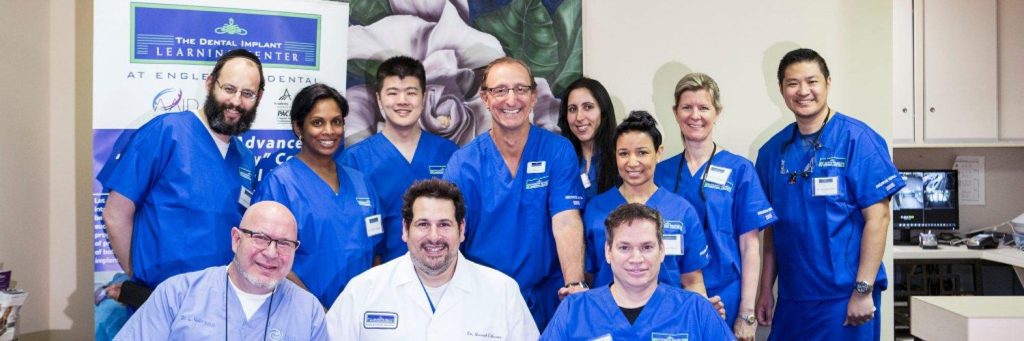
Our programs at the Dental Implant Learning Center are designed for general dentists who want evidence-based, hands-on training in implant placement, treatment planning, and guided surgery protocols.
Visit dentalimplantlearningcenter.com to schedule a consultation and find out which learning path is right for your practice.
References
[1] https://pubmed.ncbi.nlm.nih.gov/30904559/
[2] https://pubmed.ncbi.nlm.nih.gov/1809403/
[3] https://pubmed.ncbi.nlm.nih.gov/23451989/
[4] https://pubmed.ncbi.nlm.nih.gov/25495683/
[5] https://pubmed.ncbi.nlm.nih.gov/25495683/
[6] https://pubmed.ncbi.nlm.nih.gov/31461778/
[7]https://blog.iti.org/clinical-insights/soft-tissue-management-implant-supported-restorations/
[8] https://pmc.ncbi.nlm.nih.gov/articles/PMC11506129/
[9] https://pubmed.ncbi.nlm.nih.gov/17509093/
[10] https://pubmed.ncbi.nlm.nih.gov/19407159/