
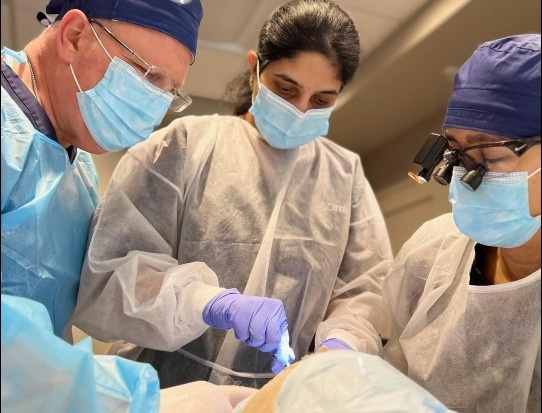
In your first year of offering dental implants, expect accelerated clinical growth, additional training and mentorship, longer procedure times as you refine efficiency, careful case selection, and steady practice growth. With structured education, CBCT-guided planning, strong patient communication, and a clear follow-up system, most general dentists build confidence within their first 10-20 cases and establish a strong foundation for long-term clinical success.
Ready to start placing implants with confidence?
Book Your Consultation
Adding dental implants to your practice is one of the most impactful decisions you can make as a general dentist.
Dental implants are widely regarded as the standard of care for replacing missing teeth because they preserve bone, restore function, and offer long-term success rates.
Implants are recognized as a well-established treatment option for tooth replacement. [2]
If you are considering starting dental implants in your practice, this guide will walk you through what to expect clinically, operationally, and financially during your first year.
What Should You Expect in Your First Year of Offering Dental Implants?
Your first year will involve five major transitions: building confidence in case selection and consultations, strengthening surgical skills through education and mentorship, improving efficiency, managing complications responsibly, and developing a structured follow-up system.
Each of these areas plays a role in creating predictable outcomes and patient trust.
Building Confidence in Implant Consultations
How Do You Structure Implant Consultations for Success?
Patient consultations are where your implant journey truly begins. Clear communication directly influences treatment acceptance. Research shows that patient understanding improves case acceptance and satisfaction, particularly when complex procedures are explained in accessible language. [5]
During your first year, expect to spend more time in consultations than you initially anticipated, as patient education is a critical part of successful implant treatment.
This is entirely normal. Many patients require detailed explanations about the implant placement process, healing timelines, and osseointegration, the potential need for bone grafting, associated costs and financing options, and the importance of long-term maintenance.
Osseointegration, the biological process where bone integrates with the implant surface, is the key to implant stability and long-term success. The concept was first described by Per-Ingvar Brånemark and remains foundational in implant dentistry. [6]
Keeping explanations simple improves patient trust. Instead of focusing on technical terminology, emphasize benefits patients care about: chewing efficiency, speech improvement, aesthetics, and preservation of jawbone structure.
Transparency about costs is essential. Implants are a higher investment than removable prosthetics, but long-term durability and bone preservation make them cost-effective over time when compared to repeated replacements of bridges or dentures.
Investing in Continuing Education and Mentorship
Why Is Advanced Training Essential in Your First Year?
Dental implant placement is technique sensitive. The American Dental Association emphasizes the importance of appropriate training and competence before performing surgical implant procedures. [7]
In your first year, you should expect to enroll in structured implant training programs that include hands-on surgical experience, prosthetic planning education, CBCT interpretation training, complication management instruction, and live patient mentoring to build clinical confidence and competence. [8]
Cone beam computed tomography has become an essential diagnostic tool in implant planning. The American Academy of Oral and Maxillofacial Radiology supports CBCT for implant site assessment because it provides three dimensional evaluation of bone volume and anatomical structures. [9]
Many new implant dentists benefit significantly from mentorship. Programs such as structured implant continuums allow you to place cases under supervision, reducing stress and improving outcomes. Continued education does not stop after your first few cases. Your first year should be viewed as a foundation year where you build safe surgical habits.
Improving Efficiency Without Compromising Patient Comfort
How Long Does It Take to Become Efficient at Implant Procedures?
In your first year, procedures will take longer. This is expected. Efficiency improves with repetition and workflow optimization.
Implant surgery involves multiple steps, including anesthesia, flap design or guided surgery protocol, osteotomy preparation, implant placement, suturing, and postoperative instructions. Careful pacing prevents surgical errors.
Patient comfort must remain a priority. The American Dental Association acknowledges that dental anxiety is common, and sedation options can improve patient experience. [10]
Consider offering oral sedation or nitrous oxide where appropriate and within your certification limits. Clear postoperative instructions reduce anxiety and decrease complication rates. Written instructions improve compliance compared to verbal instructions alone. [11]
Efficient setup also matters. Organizing implant kits, surgical guides, and materials in a standardized way reduces stress during procedures. Training a dedicated assistant in implant workflows significantly improves efficiency during your first year.
Managing Complications with Clinical Confidence
What Complications Might Occur in the First Year?
Although implant success rates are high, complications can occur. Research published in Sensors highlights a high long-term implant survival rate of 94.6% over 13.4 years, while noting that biological complications like peri-implantitis affect nearly 20% of patients. [12]
During your first year, expect to encounter minor challenges such as delayed healing, patient noncompliance, soft tissue management issues, and occasional restorative alignment corrections as you refine your protocols and clinical workflow. [13]
Preparation is key. Establish a post-operative protocol that includes scheduled follow-ups, emergency contact availability, and clear documentation.
Continuing education courses often include complication management modules. Staying current with evidence-based protocols improves your confidence when addressing unexpected issues.
Creating a Structured Implant Follow-Up System
Why Are Follow-Up Appointments Critical for Implant Success?
Follow-up care directly impacts long-term implant survival. Regular maintenance visits allow you to monitor tissue health, occlusion, and prosthetic stability.
Before patients leave their surgery appointments, schedule the appropriate follow-up visits, including a one-week healing check, suture removal if necessary, an osseointegration assessment, and restorative planning appointments to ensure continuity of care.
Clearly written aftercare instructions reduce postoperative complications. Patients who feel supported during healing are more likely to refer others and complete restorative phases.
A structured recall system integrated into your practice management software ensures no implant patient is lost to follow-up.
Promoting Your Implant Services in the First Year
How Do You Market Dental Implants Ethically and Effectively?
Once you begin placing implants confidently, patient awareness becomes essential. Many patients do not realize their general dentist offers implant placement.
Promote your implant services through educational website content, before-and-after case documentation, patient testimonials obtained with proper consent, community seminars, and internal referrals generated during hygiene exams.
The American Dental Association encourages ethical advertising that is truthful and not misleading. [14]
Educational marketing performs best. Content explaining benefits such as improved chewing efficiency, preservation of bone, and long-term durability resonates more than price-driven promotions.
Tracking Clinical and Financial Metrics
What Metrics Should You Monitor in Your First Year?
Tracking performance helps refine and strengthen your approach to implant dentistry. Key metrics to monitor include consultation-to-treatment acceptance rates, surgical complication rates, implant survival rates, production per implant case, and patient satisfaction feedback.
Collect patient feedback after completion of restorative phases. Use this data to refine communication, scheduling, and postoperative care.
Your first year is about system building. Small workflow improvements compound over time.
The Emotional Reality of Your First Year
Beyond clinical and operational adjustments, your first year will include moments of uncertainty. This is normal when expanding your scope of practice.
Confidence develops on a case-by-case basis. Mentorship and peer support reduce isolation. Implant study clubs and professional organizations provide community and access to current research.
As your surgical skill improves, stress decreases. By the end of your first year, procedures that once felt intimidating become structured and predictable.
Frequently Asked Questions About Starting Dental Implants
How Many Implant Cases Should a Beginner Start With?
Most new implant dentists begin with single-unit posterior cases in patients with adequate bone volume and minimal systemic risk factors. Careful case selection improves early success rates.
Is CBCT Necessary for Implant Planning?
Three-dimensional imaging significantly improves diagnostic accuracy and treatment planning. The American Academy of Oral and Maxillofacial Radiology supports CBCT for implant site assessment when clinically indicated.
How Long Does It Take to Become Comfortable Placing Implants?
Comfort typically improves after the first 10 to 20 well-selected cases under mentorship. Continued education and repetition accelerate confidence.
Can General Dentists Place Dental Implants?
Yes. With proper education, training, and adherence to state regulations, general dentists can competently place dental implants. The ADA emphasizes the importance of appropriate training before performing surgical procedures
Building a Foundation for Long-Term Success
Starting dental implants in your practice is both clinically rewarding and professionally transformative. Your first year will involve education, mentorship, workflow development, patient communication refinement, and careful complication management.
When approached thoughtfully, implant dentistry becomes a cornerstone service that strengthens patient relationships and elevates your clinical impact.
If you are ready to begin your implant journey, explore structured training opportunities, mentorship programs, and clinical resources available at the Dental Implant Learning Center. With the right foundation, your first year in implant dentistry can set the stage for decades of predictable, patient-centered success.