
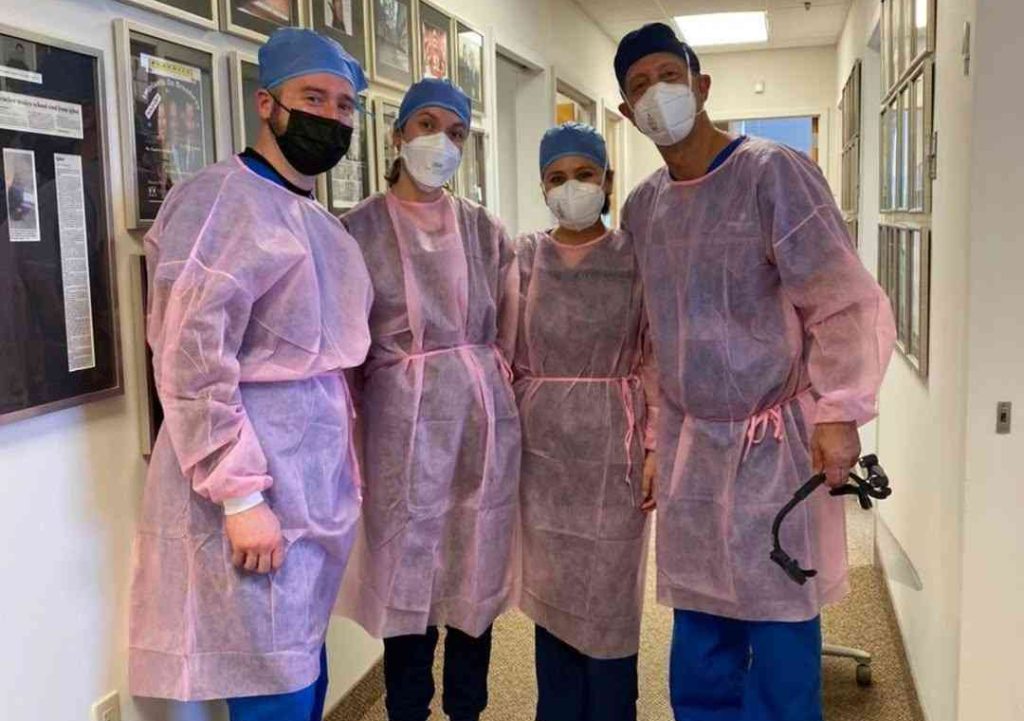
Advanced surgical education has become an essential part of modern dental practice as patient expectations, procedural complexity, and clinical responsibilities continue to increase. For many clinicians, a Live Hands-On Implant Surgical Program represents a structured and ethical pathway to expand surgical competence while remaining in private practice.
Understanding who this type of advanced training is intended for requires clarity around dental education, scope, and professional responsibility.
What Is a Live Hands On Implant Surgical Program in Dentistry?
A Live Hands-On Implant Surgical Program is a postdoctoral continuing education model designed for licensed dentists seeking hands-on training in oral surgery procedures without enrolling in a full residency program.
Unlike a maxillofacial surgery residency or an oral and maxillofacial surgery residency, which requires several years of hospital-based training following dental school, a Live Hands-On Implant Surgical Program offers focused clinical exposure while allowing the dentist to maintain an active practice.
These programs are not substitutes for OMS residency training accredited by the Commission on Dental Accreditation, but they are designed to supplement foundational dental education through supervised clinical experience and didactic instruction.
The program is designed to bridge the gap between dental school and advanced clinical practice by offering structured surgical exposure under experienced faculty.
The Role of Dental Education and Training Programs
Traditional dental school curricula emphasize broad competency across dentistry, but surgical exposure varies significantly among schools of dentistry and schools of dental medicine. [1]
While graduates are legally qualified as dentists, many seek additional training program opportunities to build confidence and competence in surgical care.
Advanced dental education pathways include postdoctoral programs, one-year fellowships, and structured mini-residency experiences. These programs provide clinical and didactic instruction beyond dental school without requiring enrollment in a six-year or four-year residency training program. [2]
General Dentists Expanding Surgical Scope in Private Practice
General dentists who want to expand their surgical capabilities are among the most appropriate candidates for a Live Hands On Implant Surgical Program. Within the scope of oral and maxillofacial surgery permitted to general dentists, procedures such as dentoalveolar surgery, surgical extractions, and dental implant placement are legally performed when the clinician has appropriate training and experience. [3,4]
By pursuing advanced training, a dentist can safely manage procedures that would otherwise be referred out, improving continuity of care and patient satisfaction in private practice. [5]
Dentists Focused on Implant Dentistry and Implantology
Implant dentistry has become a central component of modern dental care. According to the American Dental Association, millions of dental implant procedures are performed annually in the United States, and demand continues to rise. [6,7]
Placing a dental implant requires surgical proficiency, sound treatment planning, and an understanding of anatomy involving the head and neck. Dentists pursuing implantology benefit from hands-on training in extraction techniques, bone grafting, and anesthesia management, all of which are commonly included in mini-residency curricula. [8]
Early-Career Dentists After Dental School
Graduates of dental school often report limited confidence in oral surgery due to inconsistent surgical exposure during predoctoral training. [9]
A structured mini-residency allows early-career dentists to develop competence through supervised experience rather than isolated cases.
Exposure to clinical and didactic learning in a formal setting reinforces proper decision-making and complication management, which is essential for ethical patient care.
Experienced Dentists Seeking Advanced Training
Dentists with years in practice often return to advanced training to modernize their surgical techniques. Innovations in anesthesia, implant systems, and reconstructive approaches have significantly changed oral surgery practice over the past two decades.
Mini-residencies provide an opportunity for advanced training without requiring participation in a general surgery or surgery internship track, which is typical of full OMS residency programs.
Dentists Practicing in Rural or Underserved Settings
Access to oral surgeons and maxillofacial surgeons remains limited in rural areas. The Health Resources and Services Administration reports ongoing shortages of dental specialists in underserved regions.
Dentists practicing in these communities often provide outpatient and ambulatory care that includes oral surgery service functions traditionally handled by specialists. With appropriate training and experience, they can safely manage dentoalveolar and implant cases while maintaining patient safety standards.
Understanding the Difference Between Mini-Residency and OMS Residency Training
A maxillofacial surgery residency program or oral and maxillofacial surgery residency involves hospital-based care, operating room exposure, trauma surgery, reconstructive surgery, and orthognathic surgery, often over a four-year or six-year period.
Residents rotate through internal medicine, general surgery, and hospital care settings, often serving as chief resident or senior resident during later years of the program. These programs are accredited by the Commission on Dental Accreditation and may involve certification by the American Board of Oral and Maxillofacial Surgery. [10]
A mini-residency does not replicate this residency curriculum, nor does it lead to OMS board certification or accreditation by the American Dental Association. Instead, it provides focused surgical exposure appropriate for general dental practice.
Didactic and Clinical Structure of Mini-Residency Programs
High-quality programs include both didactic and hands-on training components. A didactic program supports clinical learning through lectures on anatomy, craniofacial structures, oral pathology, morbidity and mortality, and complication management.
Clinical exposure typically includes supervised procedures in outpatient or clinic settings at the university rather than hospital operating rooms. This structure reflects the realities of dental and medical care in private practice.
Regulatory and Accreditation Considerations
Mini-residencies are continuing education programs and are not accredited by the Commission on Dental Accreditation. However, they often align with educational principles established by national dental organizations such as the American Dental Association and the Association of Oral and Maxillofacial Surgeons. [11,12]
Dentists considering international dental graduates or postdoctoral application support service pathways should understand that mini-residencies do not replace CODA-accredited programs or the national matching program used for residency placement. [13]
Frequently Asked Questions
Can a general dentist perform oral surgery?
Yes. The scope of oral and maxillofacial surgery permitted to general dentists depends on state regulations and training. Procedures such as dentoalveolar surgery and dental implant placement are commonly performed by trained general dentists.
Is a mini-residency equivalent to a residency program?
No. A mini-residency is not equivalent to residency training and does not confer specialist status or certification by the American Board.
Does completion allow hospital privileges?
Hospital privileges depend on institutional credentialing and are not guaranteed upon successful completion of a mini-residency.
Final Perspective
For dentists seeking advanced training in oral surgery procedures, a mini-residency provides structured education aligned with real-world practice. It supports ethical expansion of clinical skills while respecting the distinction between general dentistry and formal oral and maxillofacial surgery service training.
Programs offered through institutions such as the Dental Implant Learning Center are designed to meet the needs of practicing dentists who value hands-on training, patient safety, and long-term professional growth. Join our next hands-on session now!
References:
- https://trident.dental/dmd-vs-dds-whats-the-difference/
- https://coda.ada.org/-/media/project/ada-organization/ada/coda/files/general_practice_residency_standards.pdf?rev=9f81e6d02785444db9b191a11406ae47&hash=49749AD426D9688D130A8C6EF2D6F42F
- https://www.michigandental.org/legal-article/oral-surgeons-and-the-scope-of-dental-practice/
- https://atriumhealth.org/-/media/chs/files/for-employees/medical-staff-services/clinical-privileges-update-forms/surgery-dops/reappointment—-oral-and-maxillofacial-surgery.pdf
- https://www.orovalleydentalarts.com/advanced-training-why-it-matters/
- https://my.clevelandclinic.org/health/treatments/10903-dental-implants
- https://www.infinitesmilesok.com/blog/2024/12/08/prosperous-prosthetics-what-makes-dental-implants-successful/
- https://glidewelldental.com/company/blog/implant-placement-5-steps-to-start-placing-dental-implants
- https://pubmed.ncbi.nlm.nih.gov/37698270/
- https://www.aboms.org/who-we-are/patient-information
- https://coda.ada.org/accreditation
- https://aaoms.org/education-meetings/academics/oms-faculty/
- https://www.studentdoctor.net/2025/09/18/one-international-applicants-journey-to-dental-school-advanced-standing-programs/